Roof Maintenance in
MURFREESBORO, TN
Most roof failures start small. A dried-out flashing seal, a clogged valley, a few cracked shingles nobody caught. Routine maintenance finds those problems while they’re still a minor repair, not a major bill.
Roof Maintenance Services in Murfreesboro, TN
Most Murfreesboro homeowners don’t think about their roof until water shows up on the ceiling, and by then what started as a $200 flashing repair has turned into rotted decking, interior water damage, and a call to the insurance company. Roof maintenance is the visit that stops that sequence before it starts, putting a trained eye on every penetration, valley, and flashing on your roof while problems are still cheap to fix. We inspect the full surface, clear debris from valleys and gutters, reseal any worn flashings, and hand you a written report with photos of everything we found. If your roof needs attention, you’ll have a straight price in writing before we touch a thing. If it’s in good shape, we’ll tell you that plainly and let you know when to schedule the next visit.

Veteran-Owned And Operated
Roof Troops is a veteran-owned roofing company based in Murfreesboro. We handle full roof replacements on residential homes, and we do it with manufacturer-certified materials and a written quote before any work starts.
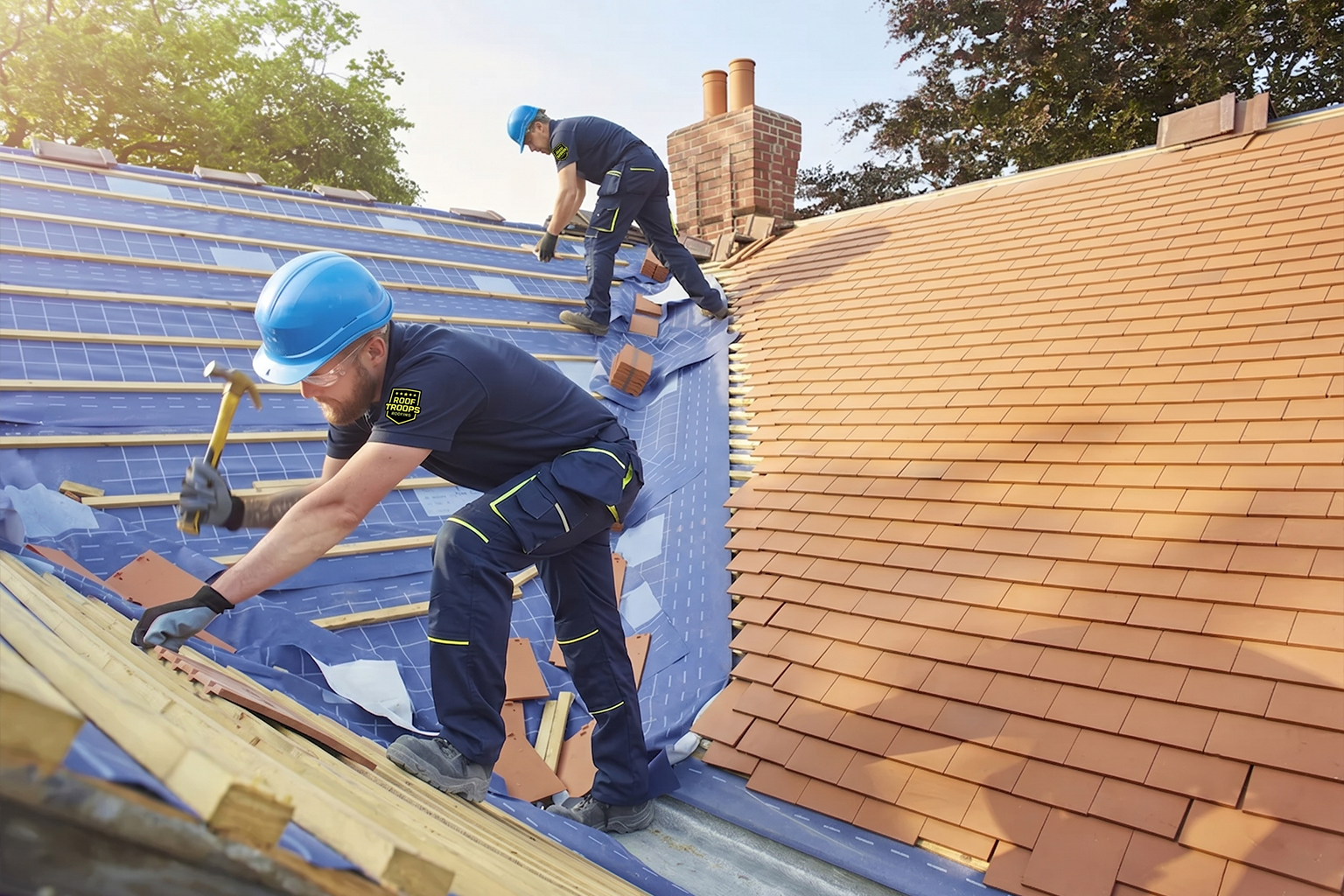
Storm damage is stressful enough. We document your roof, work with your adjuster, and handle the repair so you’re not navigating your insurer alone.
What every maintenance visit covers
Every Roof Troops maintenance visit covers the same full scope of work. We don’t cut the inspection short on a smaller house or skip the gutter check because the roof looks clean from the street. Here is exactly what gets done on every visit, so you know what you are paying for before we start.
Full Surface And Penetration Inspection
We walk the entire roof and examine every valley, ridge line, transition point, and penetration, because those are the locations where water finds its way in first. Every problem area is noted and photographed so you have a documented record of your roof's condition on that date.
Debris Removal From Valleys And Low Spots
Leaves and organic debris collect in the low areas of the roof and hold moisture against the shingles, accelerating granule loss and eventually working water into the deck underneath. We clear every valley and low spot during the visit so water sheds off the roof the way it is designed to.
Gutter Inspection And Debris Clearing
Clogged gutters back water up under the roof edge, which is one of the most common sources of the ceiling stains homeowners blame on the roof itself. We check that every gutter run is draining freely and flag any sections that are sagging, separating, or showing damage that needs repair.
Flashing Inspection And Full Reseal
Flashings around chimneys, skylights, pipe vents, and wall tie-ins are sealed with roofing caulk that dries, shrinks, and cracks over time, opening a direct water entry point. We inspect every flashing on the roof and reseal any that show cracking, separation, or wear before they become an active leak.
Written Condition Report With Photos
Before we leave, you receive a written summary covering every area we inspected, the condition of each section, any repairs we recommend, and the cost for each one. Nothing is verbal, nothing is left vague, and no repair is started without your explicit approval.
Signs your roof is due for a checkup
Every visit runs the same way from the first call to the written report we hand you at the end. There are no surprises in the process, the same way there are no surprises in the final invoice. Here is what to expect from start to finish.
- You schedule, we confirm the time: Call 615-258-9977 or submit the estimate form and we will confirm a date and arrival window that works for your schedule. We show up in that window, because showing up when we said we would is the baseline.
- We inspect the full roof first: One of our crew goes up and works through the complete surface systematically, section by section, checking every area we described in the scope above. We take photos throughout, especially of anything that needs attention or shows early-stage wear.
- We complete all maintenance work same day: Debris removal, gutter clearing, and flashing reseals are done during the same visit as the inspection, not scheduled as a separate return trip. If a shingle repair can be handled on the spot, we price it for you before we start so there are no additions to the invoice you didn’t approve.
- We walk you through what we found: Before we come down, we compile the inspection notes and photos into a written condition report that covers every area of the roof and every item we addressed or flagged. We go over it with you so you understand exactly what is on your roof and what, if anything, needs attention next.
We recommend a follow-up schedule: Based on the age and current condition of your roof, we will tell you honestly how long you can wait before the next maintenance visit and what to watch for in the meantime. Most homeowners find it easier to book on a regular interval than to wait until something looks wrong from the ground.

You schedule, we confirm the time
Call 615-258-9977 or submit the estimate form and we will confirm a date and arrival window that works for your schedule. We show up in that window, because showing up when we said we would is the baseline.

We inspect the full roof first
One of our crew goes up and works through the complete surface systematically, section by section, checking every area we described in the scope above. We take photos throughout, especially of anything that needs attention or shows early-stage wear.

We complete all maintenance work same day
Debris removal, gutter clearing, and flashing reseals are done during the same visit as the inspection, not scheduled as a separate return trip. If a shingle repair can be handled on the spot, we price it for you before we start so there are no additions to the invoice you didn't approve.

We walk you through what we found
Before we come down, we compile the inspection notes and photos into a written condition report that covers every area of the roof and every item we addressed or flagged. We go over it with you so you understand exactly what is on your roof and what, if anything, needs attention next.

We recommend a follow-up schedule
Based on the age and current condition of your roof, we will tell you honestly how long you can wait before the next maintenance visit and what to watch for in the meantime. Most homeowners find it easier to book on a regular interval than to wait until something looks wrong from the ground.
How a maintenance visit works
What roof maintenance costs in Murfreesboro
Maintenance visits are priced on the actual scope of the work, not on what we find once we get on the roof. The base visit covers the full inspection, debris removal from valleys and gutters, and minor flashing reseals as needed. Any repair work identified beyond that scope is quoted separately in writing and requires your approval before we proceed. We do not quote maintenance prices until we know your roof’s size and current condition, so call 615-258-9977 or submit the estimate form and we will give you a straight number.
Roof size and pitch affect labor time: A steep, multi-plane roof with multiple ridges, valleys, and penetrations takes considerably more time to inspect and service thoroughly than a simple low-slope gable. Our pricing reflects the actual time and care your specific roof requires, not a flat rate applied to every job.
Gutter length and debris load add scope: Gutters on a larger home or a property with heavy tree cover can carry several seasons of packed debris that takes real time to clear properly and safely. We price the gutter work based on linear footage and the actual condition of the gutters, not a fixed add-on.
Years since last service drives the scope: A roof that has not been maintained in five or more years will have heavier debris buildup in the valleys, more dried-out flashing seals to address, and more deferred minor repairs than a roof on a regular maintenance schedule. The visit cost reflects the work the roof actually needs, not a penalty for the delay.
Any repairs identified during the visit: If we find a lifted flashing, a cracked shingle section, or a failed pipe boot seal, you will have a written repair price before we touch it, and you decide whether to proceed. Small repairs caught during a maintenance visit are consistently less expensive than the same repair after water has worked into the roof deck.
Manufacturer warranty maintenance requirements: GAF, Tamko, and CertainTeed warranties frequently require documented periodic maintenance to remain valid over the full warranty term. If your roof is still under a manufacturer warranty, we produce the written inspection report in a format that satisfies that documentation requirement.
We are a veteran-owned roofing contractor based in Murfreesboro, which means we are not a national call center routing your job to whoever is available in your zip code. Don Hane founded Roof Troops after a Navy career built on the same principles that run every job we do now: show up when you said you would, do the work right, give people a straight answer, and never walk away from a commitment. We are licensed and insured in Tennessee and manufacturer-certified by GAF, Tamko, and CertainTeed, so when we tell you what your roof needs, that assessment comes from real technical training on the materials that are likely on your house. And if the roof is fine, we will tell you it is fine, because our reputation in this community matters more than selling you a repair you do not need.
- Licensed and insured in Tennessee: We carry the contractor’s license and liability insurance Tennessee law requires, and every crew member who gets on your roof is covered. You should ask any roofer for proof of both before they set a ladder against your house.
- GAF, Tamko, and CertainTeed certified: Manufacturer certification means we have been trained and vetted by the companies whose materials are on most Middle Tennessee roofs. That certification also allows us to back installs with the stronger extended warranties these manufacturers reserve for their certified contractors.
- Veteran-owned, locally accountable: Don Hane settled in Middle Tennessee to be near family, not because a market analyst picked the zip code. There is a real chance the homeowner we are working for today is someone he will run into at the grocery store, and that kind of accountability does not come from a franchise model.
- Straight assessments, no pressure either way: We photograph what we find, write it down, and give you an honest read of what the roof needs and what it does not need. If your roof is in good shape, we tell you that and walk away without trying to manufacture a reason to come back sooner.
10% discount for those who serve: Veterans, active duty, reservists, National Guard members, police, firefighters, and EMS professionals all receive 10% off. Your service is the foundation this community is built on, and this discount is one direct way we recognize that.
Why Murfreesboro homeowners trust Roof Troops
What Murfreesboro Homeowners Say
EXCELLENTTrustindex verifies that the original source of the review is Google. The service performed by these guys is top of the line. From the beginning to end it was never a hassle to figure out what my roof needed. Very satisfied and highly recommended these guys💪🏻Posted on GoogleTrustindex verifies that the original source of the review is Google. Great service, overall experience was fast and very helpful.Posted on GoogleTrustindex verifies that the original source of the review is Google. They did a very very good job! Would use again!Posted on GoogleTrustindex verifies that the original source of the review is Google. Our new roof looks fantastic and we’re sleeping better knowing it’s built to handle Tennessee’s wild weather. If you’re in Murfreesboro, Smyrna, La Vergne, or anywhere in Rutherford County and need reliable roof repair, storm damage restoration, full roof replacement, or gutter installation, Roof Troops Roofing is hands-down the best local choice. Professional, veteran-led, and truly customer-first—thank you for an outstanding job! Highly recommend to anyone searching for top-rated roofing contractors in Murfreesboro TNPosted on GoogleTrustindex verifies that the original source of the review is Google. Roof Troops Roofing completely saved our home after that nasty ice storm rolled through Murfreesboro last month! As a veteran-owned roofing company right here in Middle Tennessee, they earned every bit of our trust from day one. We noticed some leaks and granule loss on our aging roof, so I called them for their free roof inspection—they showed up the very next morning, no pushy sales tactics, just honest advice from Don and the team. They documented all the storm damage thoroughly, explained our insurance options clearly, and even helped file the claim and deal with the adjuster so we didn’t have to fight for coverage. The full roof replacement went smoothly: new premium GAF architectural shingles, upgraded underlayment, proper ventilation, and they added seamless gutters while they were up there to prevent future issues. The crew arrived on time, worked efficiently (finished in 2 days), kept the property super clean—no nails or debris left behind—and communicated constantly so we always knew what was happening.Posted on GoogleTrustindex verifies that the original source of the review is Google. We were extremely pleased from the start with Don and team from Roof Troops Roofing. Communication is very important to us, and he replied to our initial online inquiry the same day, came to evaluate our gutter damage from an ice storm the next day and work was completed within a week. Team was on time and courteous of our property, and price couldn't be beat. We will happily use them in the future.Posted on GoogleTrustindex verifies that the original source of the review is Google. Roof Troops Roofing did a great job with our roof repair. From the first meeting they explained the problem clearly and walked us through the repair process. The crew was professional, showed up on time, and made sure everything was fixed the right way. They were also very careful with our property and cleaned up after the job. Overall a great experience and I would definitely recommend them.Posted on GoogleTrustindex verifies that the original source of the review is Google. The guys at Roof Troops were amazing from start to finish. I was impressed with their proposal and the information that they taught me during our initial meeting. We wanted upgraded shingles with a specific design, and they were able to accommodate our needs. They really took care of our landscaping and architecture, which we really appreciate. We will be informing our neighbors about all of our fantastic experiences with Roof Troops RoofingPosted on GoogleTrustindex verifies that the original source of the review is Google. Roof Troops Roofing really came through when we needed somebody. We were turned down by our insurance company for damages that we received during the storm. We were going to just give up but we tried one more company and Don really showed his skills with negotiating with our adjuster. They bought our whole roof and Roof Troops Roofing did a wonderful job replacing it. We will be recommending them to everyone!Posted on GoogleTrustindex verifies that the original source of the review is Google. We had Don stop out to inspect our roof for damages after the storm. He was the second company we called. He explained thoroughly the entire process which really made us feel at ease because nothing was a surprise. They had to meet our insurance adjuster twice, but finally agreed to pay for the roof. We even got to pick a new color, which was nice. We will be calling Roof Troops Roofing first next time1
Roof maintenance questions from Murfreesboro homeowners
How often should I schedule roof maintenance?
For most asphalt shingle roofs in Middle Tennessee, a maintenance visit every two to three years is a reasonable interval for a roof in good condition. Older roofs, roofs with a history of storm damage, or roofs approaching the end of their rated lifespan benefit from annual visits, and we will tell you honestly which category yours falls into after the first inspection.
Does maintenance actually extend my roof's life?
Yes, in ways that are concrete and measurable. Debris left in the valleys holds moisture against the shingles and accelerates granule loss, dried flashing seals allow water into the deck and cause wood rot, and catching either condition early means the roof does its job for more years before a full replacement becomes necessary.
Will you tell me if replacement makes more sense?
That is exactly what we do. If the roof has serviceable years remaining, we will document the condition and tell you to maintain it. If it is past the point where maintenance is cost-effective and a replacement makes more financial sense, we will say that directly, with photos to back it up, and let you decide on your own timeline.
Can you handle a storm damage claim if you find damage?
Yes. If a maintenance visit turns up hail or wind damage that qualifies for an insurance claim, we will document the damage with the photos and written detail the adjuster needs and stay involved through the claim process. You do not have to navigate that conversation with your insurance company on your own.
Do I need to be home during the visit?
You do not need to be present while we are on the roof, but we ask that someone is reachable by phone in case we find something that changes the scope and needs your approval before we proceed. We will call before doing anything beyond the agreed work, and we will never add to the invoice without that approval first.
Proudly Serving Murfreesboro & Nearby Cities
Antioch, TN
Brentwood, TN
Christiana, TN
Eagleville, TN
Franklin, TN
La Vergne, TN
Lascassas, TN
Manchester, TN
Murfreesboro, TN