Metal Roofing in Murfreesboro, TN
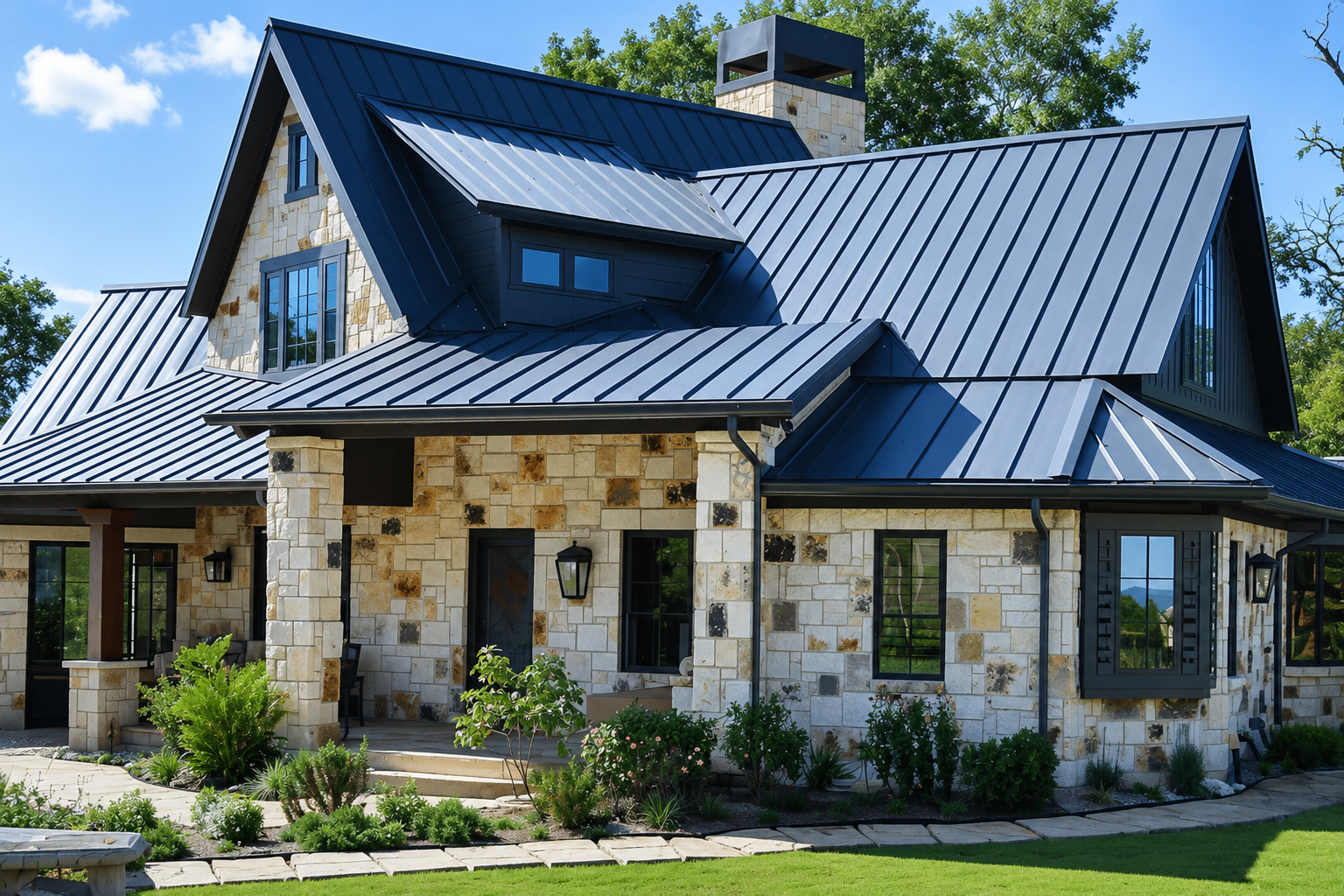
A metal roof outlasts asphalt by decades and holds up against the hail and wind Middle Tennessee sees every storm season. We install standing seam and exposed fastener systems to manufacturer spec, with a written quote before anything starts.
Why Murfreesboro Homeowners Are Looking At Metal
Asphalt is still the most common roof in Rutherford County, but more homeowners are asking about metal, and the reasons are practical, not trendy. A metal roof handles hail, high wind, and Tennessee summer heat better than asphalt does. It costs more upfront, but it can outlast two or three asphalt replacements over the life of a home. Roof Troops installs both standing seam and exposed fastener systems, and we’ll tell you honestly which one fits your roof and your budget. You get a written quote before we start, and that number doesn’t move unless something changes underneath, and we call you first if it does.

Veteran Owned And Operated
Roof Troops is a veteran owned roofing company based in Murfreesboro. We handle full roof replacements on residential homes, and we do it with manufacturer certified materials and a written quote before any work starts.
What A Roof Troops Metal Installation Covers
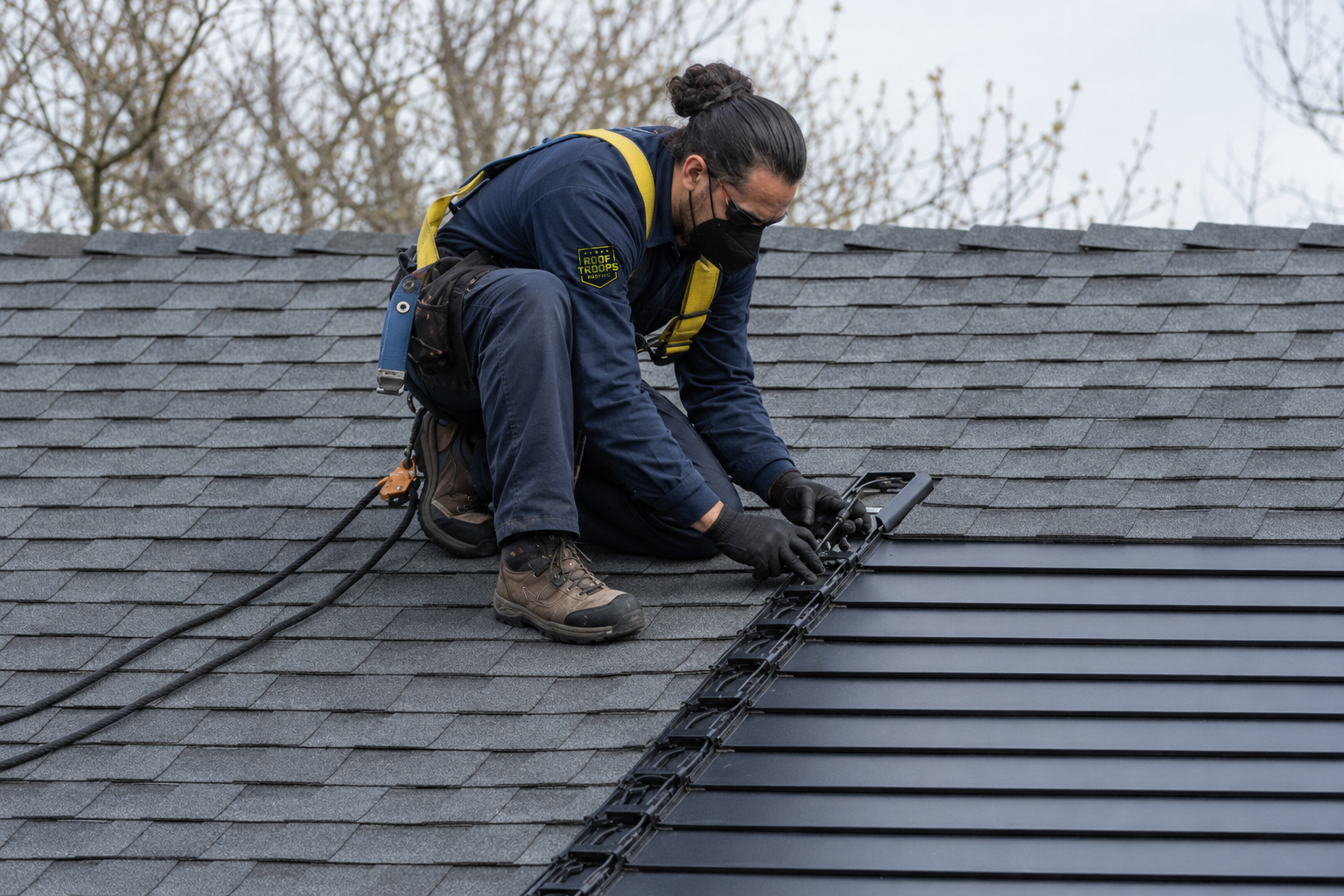
A roof installation is the full job, done right, with nothing hidden. Here is exactly what is included on every Roof Troops installation, so you know what you’re paying for before we start.
Tear-Off And Deck Inspection
We remove your existing roofing down to bare decking and check every section for soft spots or rot. Any repairs get written out and priced before we touch them, no surprises once panels are on.
High-Temperature Synthetic Underlayment
Metal roofing needs underlayment rated for the heat a metal panel holds, not standard asphalt felt. This protects the deck and keeps your manufacturer warranty intact.
Panel Installation To Manufacturer Spec
Standing seam goes down with concealed fasteners and interlocking seams; exposed fastener panels use weather-sealed screws at the correct spacing. Either way, it's installed exactly how the manufacturer requires so your warranty holds.
Trim, Flashing, And Closures At Every Edge
Ridge caps, rake trim, valley flashing, and closure strips seal every transition where water could get behind a panel. This is where most metal roof leaks start when a contractor cuts corners.
Site Cleanup And Magnetic Sweep
We run a magnetic roller across your yard and driveway before we leave to pick up stray fasteners. The job isn't done until your property is clean.
Is Metal Roofing the Right Call for Your Home?
Metal isn’t the right fit for every roof or every budget, and we’ll tell you plainly if it isn’t yours. A few situations where Murfreesboro homeowners typically choose metal over another asphalt replacement:
Repeated hail and wind damage. If storm damage keeps sending you back for asphalt repairs, metal handles impact and high wind far better. You stop budgeting for the same repair every storm season.
Wanting a longer-term roof. Asphalt typically needs replacing every 15 to 20 years in this climate. Metal can last 40 to 70 years depending on the system, so you’re not planning another reroof in a decade.
Summer energy costs. Metal reflects more heat than asphalt, which can lower attic temperatures during peak summer. That translates to less strain on your AC during the months it runs hardest.
A steep or complex roofline. Standing seam sheds water fast on steep pitches and handles valleys and dormers cleanly. It’s a strong fit where water needs to move off the roof quickly.
Already down to the decking anyway. If you’re doing a full tear-off regardless, it’s the right moment to compare metal against another asphalt reroof. We’ll walk you through the real cost difference for your specific roof.
The honest answer is that price varies depending on several things. We’ll give you an exact number in your written estimate. Here’s what moves it.

Free estimate and honest assessment.
We come out, get on the roof, and tell you whether metal makes sense for your home and budget. You get a written quote before anything else happens.

Panel and system selection
We'll walk you through standing seam versus exposed fastener, in the finishes available through our manufacturer certifications.

Written quote, no moving targets
The number we give you is the number you pay, unless we find a structural issue underneath the old roof. If that happens, we call you before doing anything.

The installation itself
Metal installations typically take 24-48 hours, and we'll give you a realistic timeline before we start.

Inspection and cleanup
We walk the finished roof with you, run the magnetic sweep, and clear the site before we leave.

Warranty
Your metal roof carries the manufacturer's material warranty through our certification, plus our own workmanship warranty.
How a Roof Troops Metal Installation Works
Standing Seam Vs. Exposed Fastener
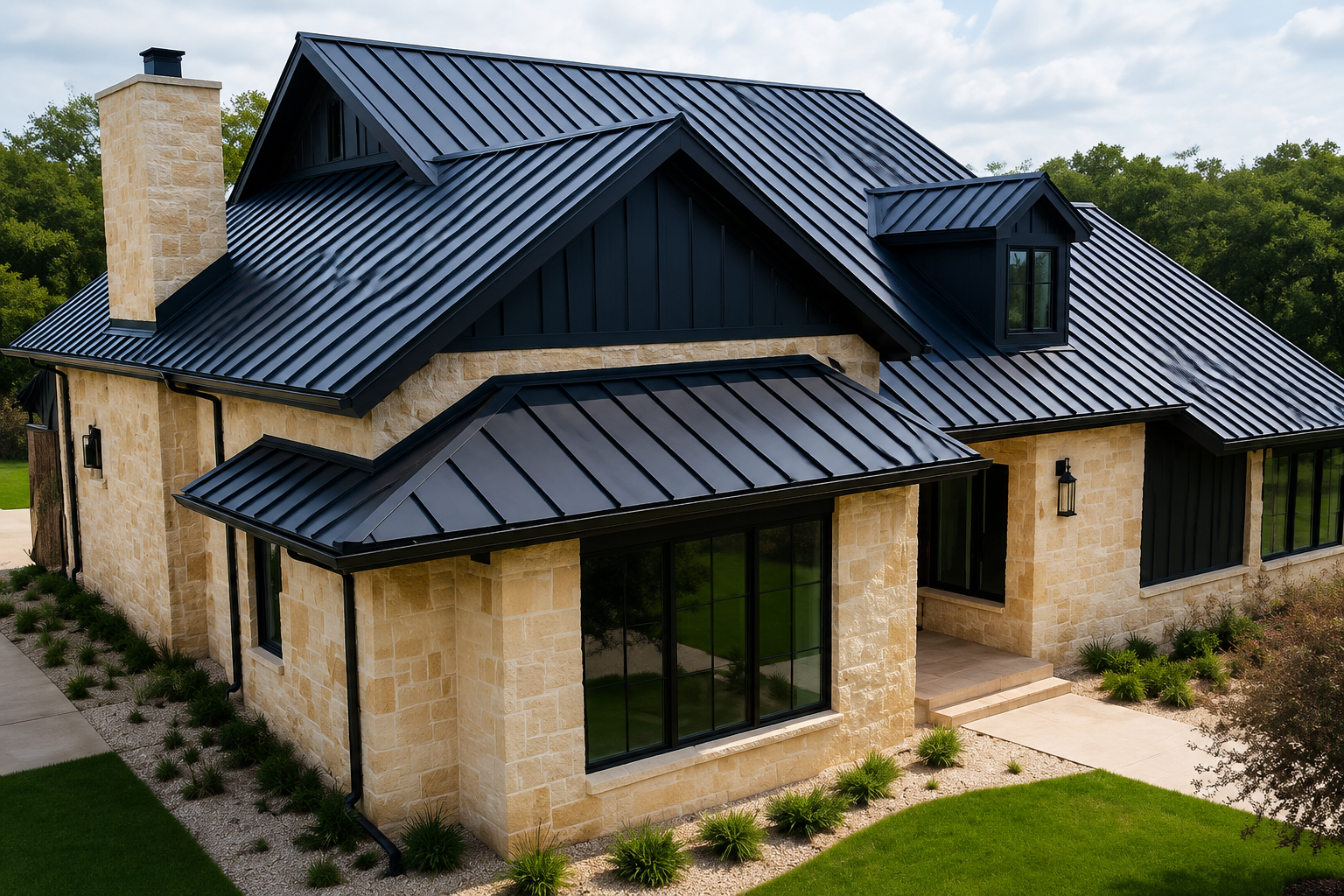
Metal roofing isn’t one product, it’s two different systems with different costs and different maintenance over time. We install both, and we’ll help you pick based on your roof and your budget, not whichever one costs more.
Standing Seam Panels
Concealed fasteners and interlocking vertical seams give a clean look with no exposed screws to work loose over time. It costs more upfront but needs less maintenance over the life of the roof.
Exposed Fastener Panels
Fasteners are visible and weather-sealed at each screw point, which brings the cost down significantly compared to standing seam. It's a strong option for outbuildings, garages, or a tighter budget, though the fasteners need periodic checking over the years.
What Affects The Cost Of A Metal Roof In Murfreesboro
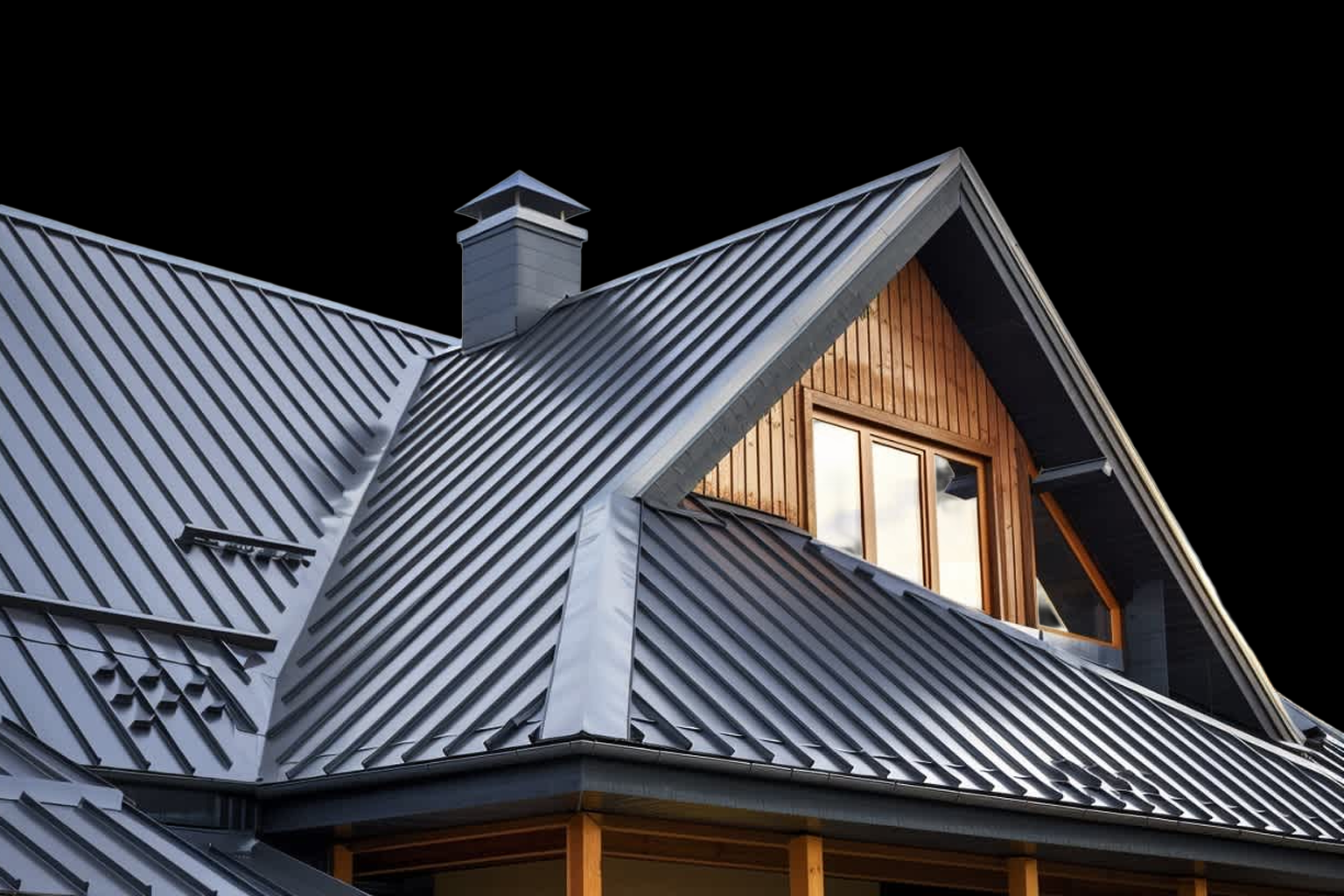
Metal costs more than asphalt, and the range depends on more than square footage alone.
Panel system. Standing seam costs more than exposed fastener due to labor and the concealed fastening method. We’ll quote both if you want a direct comparison for your roof.
Roof size and complexity. A steep roof, multiple valleys, or several dormers takes more time and material than a simple rectangular roof. We measure your actual roof before quoting, not a rough estimate.
Tear-off scope. If we’re removing multiple layers of old roofing or repairing damaged decking, that adds to the job. We tell you what we find and what it costs before we touch it.
Trim and penetrations. Chimneys, skylights, and vents each need their own flashing and detail work. More penetrations means more labor at those points.
Finish and color. Premium finishes and less common colors can carry a higher material cost than standard options. We’ll show you what’s available at each price point.
A metal roof is a decision you live with for decades, so who installs it matters more than it does with an asphalt reroof you’ll replace again in 20 years. Roof Troops is veteran-owned, built by Navy veteran Don Hane, and the same accountability that carried through two tours of service carries into every job we run. We’re manufacturer-certified through GAF, Tamko, and CertainTeed, so your metal roof is installed exactly to the standard that keeps the warranty valid. You get a written quote before we start and a straight answer if metal isn’t the right fit, we’re not going to sell you a system you don’t need. If you’re a veteran, active duty, reservist, National Guard member, police officer, firefighter, or EMS, that service earns you a 10% discount on the job.
Why Murfreesboro Homeowners Trust Us With A Metal Roof
What Murfreesboro Homeowners Say
EXCELLENTTrustindex verifies that the original source of the review is Google. The service performed by these guys is top of the line. From the beginning to end it was never a hassle to figure out what my roof needed. Very satisfied and highly recommended these guys💪🏻Posted on GoogleTrustindex verifies that the original source of the review is Google. Great service, overall experience was fast and very helpful.Posted on GoogleTrustindex verifies that the original source of the review is Google. They did a very very good job! Would use again!Posted on GoogleTrustindex verifies that the original source of the review is Google. Our new roof looks fantastic and we’re sleeping better knowing it’s built to handle Tennessee’s wild weather. If you’re in Murfreesboro, Smyrna, La Vergne, or anywhere in Rutherford County and need reliable roof repair, storm damage restoration, full roof replacement, or gutter installation, Roof Troops Roofing is hands-down the best local choice. Professional, veteran-led, and truly customer-first—thank you for an outstanding job! Highly recommend to anyone searching for top-rated roofing contractors in Murfreesboro TNPosted on GoogleTrustindex verifies that the original source of the review is Google. Roof Troops Roofing completely saved our home after that nasty ice storm rolled through Murfreesboro last month! As a veteran-owned roofing company right here in Middle Tennessee, they earned every bit of our trust from day one. We noticed some leaks and granule loss on our aging roof, so I called them for their free roof inspection—they showed up the very next morning, no pushy sales tactics, just honest advice from Don and the team. They documented all the storm damage thoroughly, explained our insurance options clearly, and even helped file the claim and deal with the adjuster so we didn’t have to fight for coverage. The full roof replacement went smoothly: new premium GAF architectural shingles, upgraded underlayment, proper ventilation, and they added seamless gutters while they were up there to prevent future issues. The crew arrived on time, worked efficiently (finished in 2 days), kept the property super clean—no nails or debris left behind—and communicated constantly so we always knew what was happening.Posted on GoogleTrustindex verifies that the original source of the review is Google. We were extremely pleased from the start with Don and team from Roof Troops Roofing. Communication is very important to us, and he replied to our initial online inquiry the same day, came to evaluate our gutter damage from an ice storm the next day and work was completed within a week. Team was on time and courteous of our property, and price couldn't be beat. We will happily use them in the future.Posted on GoogleTrustindex verifies that the original source of the review is Google. Roof Troops Roofing did a great job with our roof repair. From the first meeting they explained the problem clearly and walked us through the repair process. The crew was professional, showed up on time, and made sure everything was fixed the right way. They were also very careful with our property and cleaned up after the job. Overall a great experience and I would definitely recommend them.Posted on GoogleTrustindex verifies that the original source of the review is Google. The guys at Roof Troops were amazing from start to finish. I was impressed with their proposal and the information that they taught me during our initial meeting. We wanted upgraded shingles with a specific design, and they were able to accommodate our needs. They really took care of our landscaping and architecture, which we really appreciate. We will be informing our neighbors about all of our fantastic experiences with Roof Troops RoofingPosted on GoogleTrustindex verifies that the original source of the review is Google. Roof Troops Roofing really came through when we needed somebody. We were turned down by our insurance company for damages that we received during the storm. We were going to just give up but we tried one more company and Don really showed his skills with negotiating with our adjuster. They bought our whole roof and Roof Troops Roofing did a wonderful job replacing it. We will be recommending them to everyone!Posted on GoogleTrustindex verifies that the original source of the review is Google. We had Don stop out to inspect our roof for damages after the storm. He was the second company we called. He explained thoroughly the entire process which really made us feel at ease because nothing was a surprise. They had to meet our insurance adjuster twice, but finally agreed to pay for the roof. We even got to pick a new color, which was nice. We will be calling Roof Troops Roofing first next time1
Metal Roofing Questions From Murfreesboro Homeowners
Is a metal roof worth the extra cost over asphalt?
It depends on how long you plan to stay in the home. Metal costs more upfront but can last two to three times longer than asphalt, so the cost per year of roof life is often lower even though the sticker price is bigger.
Is a metal roof loud in the rain?
Not with a proper installation. Once panels go over solid decking and underlayment, the noise difference from asphalt is minimal, the “tin roof in a rainstorm” idea comes from old barn-style installs with no solid deck underneath.
How long does a metal roof last?
Most systems last 40 to 70 years depending on panel type and finish, compared to 15 to 20 years for asphalt in this climate.
How long does an installation take?
Depending on size and scope, but generally we try to finish in 1 day.
Do you offer financing for a metal roof?
Yes, through our financing partner Acorn Finance, with options available without a hard credit pull.
Proudly Serving Murfreesboro & Nearby Cities
Antioch, TN
Brentwood, TN
Christiana, TN
Eagleville, TN
Franklin, TN
La Vergne, TN
Lascassas, TN
Manchester, TN
Murfreesboro, TN