Roof Inspection in
Murfreesboro, TN
We’ll climb up, take a hard look, photograph what we find, and tell you exactly what your roof needs, and what it doesn’t.
Honest Roof Inspections for Murfreesboro Homeowners
Most homeowners don’t think about their roof until something goes wrong. By then, a small problem that would’ve cost a few hundred dollars to fix has had months, sometimes years, to get worse. A professional roof inspection in Murfreesboro gives you a clear read on where things actually stand, so you can make a decision on your timeline, not in a panic.
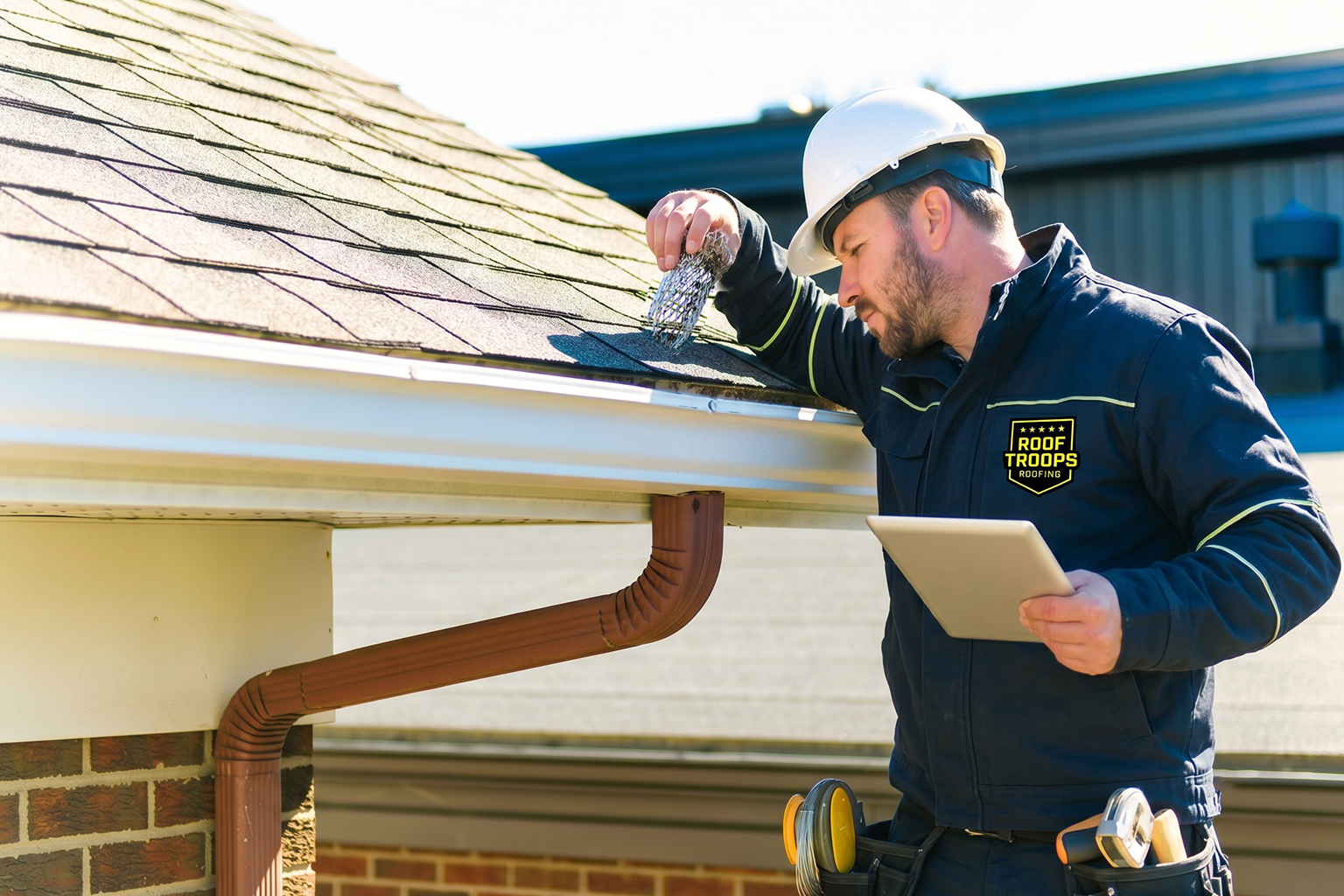
We inspect every roof the same way: we get up on it, we look at every surface, and we show you what we find. Photos, plain-language explanation, honest recommendation. If your roof is in good shape, we’ll tell you that. If it needs work, we’ll tell you what kind and what it’ll cost. No pressure either way.

Veteran-Owned And Operated
Roof Troops is a veteran-owned roofing company based in Murfreesboro. We handle full roof replacements on residential homes, and we do it with manufacturer-certified materials and a written quote before any work starts.
Storm damage is stressful enough. We document your roof, work with your adjuster, and handle the repair so you’re not navigating your insurer alone.
What a Roof Troops Inspection Covers
A thorough inspection isn’t a two-minute walkaround. We go through the whole system, top to bottom, because a roof that leaks usually has more than one thing going on.
Shingles And Surface Condition
We check for cracked, curling, missing, or granule-stripped shingles. Each of those signs tells a different story about where the roof is in its life.
Flashing at Every Transition Point
Flashing around chimneys, skylights, vents, and valleys is where most leaks start. We check every seam and report anything that's lifted, cracked, or improperly sealed.
Gutters And Drainage
Gutters that pull away from the fascia or hold standing water send it back against the roof edge. We check for damage, slope, and whether water is clearing the roofline the way it should.
Ridge And Hip Condition
The ridge line takes the most weather. Ridge cap shingles that are cracking or lifting are often the first sign a roof is aging out.
Soffits And Fascia
Rotting or damaged fascia behind the gutters usually means moisture has been sitting there longer than it should. We flag anything that points to a bigger water problem.
Attic Ventilation
Poor ventilation shortens shingle life from the inside out. If we can access the attic, we check for proper airflow and signs of moisture buildup or heat damage.
Photo Documentation of Everything We Find
You get photos of every issue we note, so you can see exactly what we're talking about and have a record for insurance purposes if it comes to that.
When to Call for a Roof Inspection
You don’t need to wait for a leak to get your roof looked at. These are the situations where an inspection is worth scheduling.
After a major storm: Hail, high winds, and falling debris can damage a roof without leaving obvious signs from the ground. Murfreesboro and Rutherford County get their share of severe storms. If you had one move through recently and haven’t had the roof checked, it’s worth doing before storm season stacks up.
You’re buying or selling a home: A pre-purchase inspection can surface problems before closing, giving you negotiating room or saving you from a surprise after you move in. Sellers use them for the same reason: know what’s there before a buyer’s inspector finds it.
Your roof is more than 15 years old: Most asphalt shingle roofs in Middle Tennessee last 20 to 25 years with no major weather events, less with repeated storm exposure. If yours is getting up there, an inspection tells you how much runway you have left.
You’re seeing interior water stains: A water stain on the ceiling doesn’t always mean the leak is directly above it. Moisture travels along rafters and roof decking before it drips. An inspection can trace it back to the source.
You notice granules in the gutters: Asphalt shingles shed granules as they age. A heavy amount collecting in the gutters is a reliable early sign the surface is breaking down.
You’re filing an insurance claim: Insurance adjusters work fast, and they don’t always catch everything. An independent inspection before or alongside the adjuster’s visit gives you documentation to back up your claim.

Schedule
Call us at 615-258-9977 or fill out the estimate form. We'll set a time that works for you. You don't need to be home, but you're welcome to be.

We inspect the full roof
One of our crew gets on the roof and goes through every section. We don't do drive-by assessments from the ground.

You get the photos and the findings
We document everything we find, show you the photos, and walk you through what it means in plain language.

We give you an honest recommendation
If the roof needs repair, we'll tell you what kind and what it'll cost. If it needs replacement, we'll explain why and give you a written quote. If it's in good shape, we'll tell you that and send you on your way. No sales pressure.

Your decision, your timeline
The report is yours. There's no obligation to hire us to do the work. We give you the information; you decide what to do with it.
How the Inspection Works
Roofing materials for Murfreesboro homes
We install a full range of materials. Most residential replacements in the Murfreesboro area use asphalt shingles, and for good reason: they perform well in Middle Tennessee’s climate, they’re cost-effective, and the manufacturers we’re certified through make products that hold up.
Asphalt Shingles
Dimensional shingles are the most common choice for residential homes. They're heavier and longer-lasting than 3-tab, and they carry better manufacturer warranties. We carry GAF, Tamko, and CertainTeed lines.
Flat and low-slope roofing
For commercial properties or sections of residential homes with low-slope roofs. We install TPO and EPDM membrane systems. [See our commercial roofing page.]
Metal Roofing
Steel and aluminum standing-seam panels, or metal shingles. Metal lasts longer than asphalt, handles hail better, and typically carries a longer warranty. The upfront cost is higher.
What Affects the Cost of a Roof Inspection in Murfreesboro
Most standard residential roof inspections are straightforward. A few factors affect the time and detail involved.
Roof size and pitch: A larger roof takes longer to inspect. A steep-pitch roof requires more care and time to navigate safely.
Number of penetrations: Every chimney, skylight, vent stack, and pipe penetration is a potential leak point that needs to be checked individually. More penetrations mean more to examine.
Accessibility: Roofs with complex geometry, multiple levels, or difficult access points take more time than a simple gable.
Scope of the inspection: A standard visual inspection of the exterior is different from a full evaluation that includes attic access, ventilation assessment, and detailed moisture mapping.
Storm damage scope: Post-storm inspections after severe weather take longer because we’re documenting damage systematically for insurance purposes, not just doing a general condition check.
We don’t give price ranges in advertising because they’re wide enough to be useless. The only number that matters is the one on your written quote, and we provide that free.
We’re a licensed, veteran-owned roofing contractor based in Murfreesboro. We serve Rutherford, Davidson, and Williamson counties, and we’ve been doing this work the same way since day one: show up, do the job right, and tell the truth about what we find.
Don Hane, the founder, served two tours in the U.S. Navy including Desert Storm. The values that came with that, show up when you say you will, do the job right, don’t cut corners, never quit on a commitment, are the same ones this company runs on. You’ll see it from the first call.
A few things that matter for inspections specifically:
We photograph everything: You won’t get a verbal summary and a handshake. You get photos of every issue we note, labeled and explained. That documentation protects you whether you hire us or not.
We tell you if nothing is wrong: A lot of contractors won’t do that, because it doesn’t sell work. We will. If your roof is fine, you’ll know it, and you won’t spend a dollar fixing something that doesn’t need fixing.
We handle insurance claims: If the inspection turns up storm damage, we can work directly with your insurance company and walk you through the claims process. That’s not something every contractor offers.
No surprise costs: Every quote we give is written. If the scope changes, we call you before it does. The number on the quote is the number on the invoice.
Manufacturer-certified: We’re certified installers for GAF, Tamko, and CertainTeed. That matters for inspections because it means we know what proper installation looks like, and we can spot where corners were cut on the previous job.
10% discount for veterans, active duty, reservists, National Guard, police, fire, and EMS. Your service matters to us.
Why Murfreesboro Homeowners Call Roof Troops First
What Murfreesboro Homeowners Say
EXCELLENTTrustindex verifies that the original source of the review is Google. The service performed by these guys is top of the line. From the beginning to end it was never a hassle to figure out what my roof needed. Very satisfied and highly recommended these guys💪🏻Posted on GoogleTrustindex verifies that the original source of the review is Google. Great service, overall experience was fast and very helpful.Posted on GoogleTrustindex verifies that the original source of the review is Google. They did a very very good job! Would use again!Posted on GoogleTrustindex verifies that the original source of the review is Google. Our new roof looks fantastic and we’re sleeping better knowing it’s built to handle Tennessee’s wild weather. If you’re in Murfreesboro, Smyrna, La Vergne, or anywhere in Rutherford County and need reliable roof repair, storm damage restoration, full roof replacement, or gutter installation, Roof Troops Roofing is hands-down the best local choice. Professional, veteran-led, and truly customer-first—thank you for an outstanding job! Highly recommend to anyone searching for top-rated roofing contractors in Murfreesboro TNPosted on GoogleTrustindex verifies that the original source of the review is Google. Roof Troops Roofing completely saved our home after that nasty ice storm rolled through Murfreesboro last month! As a veteran-owned roofing company right here in Middle Tennessee, they earned every bit of our trust from day one. We noticed some leaks and granule loss on our aging roof, so I called them for their free roof inspection—they showed up the very next morning, no pushy sales tactics, just honest advice from Don and the team. They documented all the storm damage thoroughly, explained our insurance options clearly, and even helped file the claim and deal with the adjuster so we didn’t have to fight for coverage. The full roof replacement went smoothly: new premium GAF architectural shingles, upgraded underlayment, proper ventilation, and they added seamless gutters while they were up there to prevent future issues. The crew arrived on time, worked efficiently (finished in 2 days), kept the property super clean—no nails or debris left behind—and communicated constantly so we always knew what was happening.Posted on GoogleTrustindex verifies that the original source of the review is Google. We were extremely pleased from the start with Don and team from Roof Troops Roofing. Communication is very important to us, and he replied to our initial online inquiry the same day, came to evaluate our gutter damage from an ice storm the next day and work was completed within a week. Team was on time and courteous of our property, and price couldn't be beat. We will happily use them in the future.Posted on GoogleTrustindex verifies that the original source of the review is Google. Roof Troops Roofing did a great job with our roof repair. From the first meeting they explained the problem clearly and walked us through the repair process. The crew was professional, showed up on time, and made sure everything was fixed the right way. They were also very careful with our property and cleaned up after the job. Overall a great experience and I would definitely recommend them.Posted on GoogleTrustindex verifies that the original source of the review is Google. The guys at Roof Troops were amazing from start to finish. I was impressed with their proposal and the information that they taught me during our initial meeting. We wanted upgraded shingles with a specific design, and they were able to accommodate our needs. They really took care of our landscaping and architecture, which we really appreciate. We will be informing our neighbors about all of our fantastic experiences with Roof Troops RoofingPosted on GoogleTrustindex verifies that the original source of the review is Google. Roof Troops Roofing really came through when we needed somebody. We were turned down by our insurance company for damages that we received during the storm. We were going to just give up but we tried one more company and Don really showed his skills with negotiating with our adjuster. They bought our whole roof and Roof Troops Roofing did a wonderful job replacing it. We will be recommending them to everyone!Posted on GoogleTrustindex verifies that the original source of the review is Google. We had Don stop out to inspect our roof for damages after the storm. He was the second company we called. He explained thoroughly the entire process which really made us feel at ease because nothing was a surprise. They had to meet our insurance adjuster twice, but finally agreed to pay for the roof. We even got to pick a new color, which was nice. We will be calling Roof Troops Roofing first next time1
Roof Inspection Questions, Answered
How long does a roof inspection take?
Most residential roof inspections take around 1 hour, depending on the size of the roof. We never rush the process.
Do I need to be home during the inspection?
No. As long as we can access the roof and, if needed, the attic, we can complete the inspection without you there. We’ll send you photos and go over the findings by phone or in person, whichever you prefer.
What's the difference between a roof inspection and an insurance adjuster's inspection?
An insurance adjuster is working for the insurance company. We work for you. Our inspection documents what’s actually on your roof, which can be important if you feel the adjuster’s estimate missed something. We can also attend the adjuster inspection with you and advocate on your behalf.
Can you inspect a roof before I buy a house?
Yes. Pre-purchase inspections are one of the most common things we do. We’ll give you a detailed condition report and a realistic picture of the roof’s remaining life, so you’re not finding out on move-in day.
Will you try to sell me a replacement if I just need an inspection?
No. Our job is to give you an accurate read on what’s there. If the roof is fine, we’ll tell you. If it needs repair, we’ll tell you that. If it needs replacement, we’ll explain exactly why and give you a written quote with no obligation attached.
What happens after the inspection?
You get the photos and the findings. If we recommended any work, we’ll provide a written quote. What you do from there is entirely up to you. We don’t follow up repeatedly or pressure you into a decision.
Do you inspect commercial roofs?
Yes. We inspect flat and low-slope commercial roofs, including TPO and EPDM systems. Commercial inspections are scoped separately. Call us at 615-258-9977 to discuss what you need.
Proudly Serving Murfreesboro & Nearby Cities
Antioch, TN
Brentwood, TN
Christiana, TN
Eagleville, TN
Franklin, TN
La Vergne, TN
Lascassas, TN
Manchester, TN
Murfreesboro, TN